
Website Preloader
SAA The silent engine that drives long-term returns

SAA The silent engine that drives long-term returns

The Role of SAA

SAA is the cornerstone of a robust investment process. It represents the deliberate, long-term allocation across asset classes based on a portfolio’s return objectives and risk tolerance. SAA provides the structural blueprint for achieving investment goals.

We rely on portfolio optimisation to help determine the most efficient allocation. Our framework optimises for the best risk-adjusted returns while maximising the probability of achieving specific target returns.

For example, the Fairtree Balanced Prescient Fund is built around an SAA that targets a real return of CPI + 5%. This target reflects the long-term requirements of many investors in real terms. The Fund’s optimiser-driven construction increases the likelihood of reaching this return objective with the least amount of unnecessary risk, and its rolling three-year performance since inception has achieved its SAA (CPI +5%) more than threequarters of the time.

Importantly, when we talk about “risk,” we believe it goes beyond volatility or drawdowns alone. Too often, risk is framed only as the journey (standard deviation, value-at-risk, or the discomfort investors may feel during short-term fluctuations). But we believe the destination matters more. A portfolio that consistently experiences low volatility but fails to meet its return target is not a successful one.


The Fairtree Balanced Prescient Fund, on a risk adjusted basis, has consistently reached its target. 
The limits of TAA

Many academic studies and practical experiences show that aggressive TAA often detracts from longterm returns. Timing markets consistently is extremely difficult, and excessive deviation from the SAA can result in costly errors.

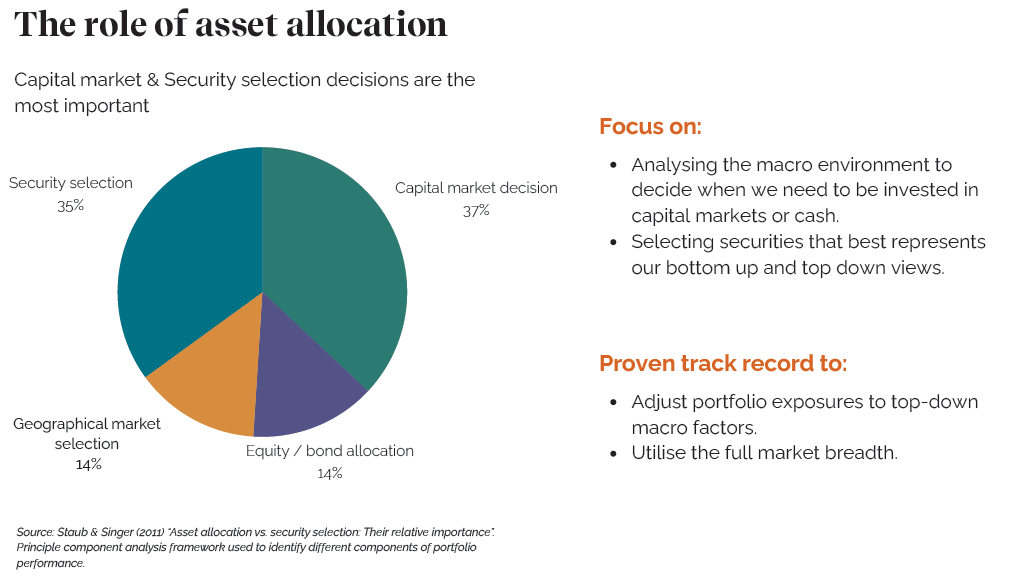
The seminal Singer (2000) study emphasises that the most important decision is the market exposure itself, the structural allocation to equities, bonds and alternatives. We believe TAA should primarily be used for protection and reducing exposure in extreme risk-off environments or opportunistically take advantage of dislocations.
TOUR APPROACH

Our approach is to maintain a tight rein on our SAA and use TAA sparingly through modest, dynamic overweight or underweight positions. This disciplined approach ensures we don’t drift from our long-term objectives while retaining the ability to react to macro shifts. Only when we believe earnings recessions are approaching, which may lead to severe drawdowns, willwe use TAAmore aggressively.


A holistic investment approach

At Fairtree, we believe our edge lies in how we bring together top-down macro understanding with bottom-up insight. Rather than expressing macro views through large TAA swings, we prefer to express them within asset classes through security selection and sector rotation. This has proven to be a more reliable method of reflecting macro conviction. For example, a bearish view on global growth may lead us to favour defensive sectors or companies with pricing power within equities, rather than aggressively reducing equity exposure in the TAA.

Our investment process is grounded in diversity and depth:

SAA for growth and diversification, giving structure and consistency.

TAA for flexibility and risk protection, used cautiously.

Security and sector selection to reflect macro themes in a risk-efficient way.

Fairtree’s multi-asset philosophy is simple: anchor portfolios in strong strategic foundations and remain nimble at the edges. TAA is not the hero of the story; it is a tool for managing tail risk and opportunistic tilts. Real value is added through intelligent design of SAA and thoughtful expression of macro themes through security selection.


 

What benchmark is your manager using?

What benchmark is your manager using?

The current landscape:

Recent changes to ASISA’s Fund Classification Standard, which became effective on 1 October 2024, saw the introduction of a new category, the SA Equity – SA General category (“SA Equity Category”), in addition to the existing SA Equity – General Category (“General Equity Category”). This new category is for portfolios that invest exclusively in South African equities. This update is a positive step forward, partly prompted by the SARB’s increase in offshore limits to 45% for institutional investors. However, even within the revised General Equity Category, meaningful comparison remains a challenge due to benchmark misalignment.


Why benchmarks matter:

A benchmark is more than just a point of reference; it’s a standard by which fund performance is measured. However, when a fund’s benchmark doesn’t align with its strategy, particularly its level of offshore exposure, performance comparisons can be misleading.


Breaking down the benchmark: Lack of offshore exposure:

Despite ASISA’s efforts to enhance comparability, there is a significant variation in offshore allocations in the General Equity Category.We have observed that:

Approximately 40% of funds have no offshore exposure

Approximately 30% have less than 20% offshore exposure

Only 30% have offshore exposure exceeding 20%

This wide dispersion in allocation makes direct comparisons difficult, especially when many funds still benchmark themselves to indices that don’t reflect any global exposure.


Benchmark misalignment:

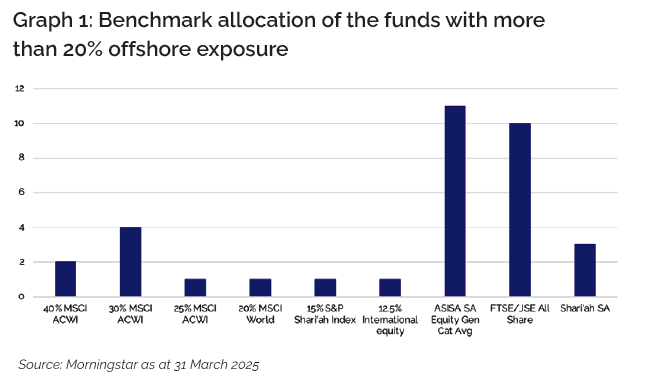
Among the 34 funds with offshore exposure exceeding 20%, 13 utilise benchmarks focused solely on South African equities, lacking any global equity component. 11 funds use the General Category average, which, as noted earlier, is predominantly South African equities. This misalignment can lead to inaccurate performance assessments.

By integrating these into a single, cohesive strategy, the Fund offers:

Enhanced access to a broader universe of opportunities gives exposure to higher growth, quality and liquid companies.

Elimination of duplication/missed themes when using a building block approach.

Efficient and agile asset allocation due to the flat decision-making structure.

Leveraging the best ideas of the successful local and global equity teams.

Less foreign exchange volatility than accessing a 100% global equity fund.

In its first year, the Fund exceeded expectations, outperforming both the standalone Fairtree SA Equity Prescient Fund and the Fairtree Global Equity Prescient Feeder Fund. This strong performance demonstrates the value of an integrated investment approach, ensuring consistent returns while minimising risk.

The Fairtree Blended Equity Prescient Fund brings together our local and global equity expertise in a single, integrated strategy, measured against a benchmark that accurately reflects its investment strategy and objectives. This ensures meaningful performance comparisons and a clear understanding of how your capital is being managed.

Why investors are betting on gold

Why investors are betting on gold

Why investors are betting on gold

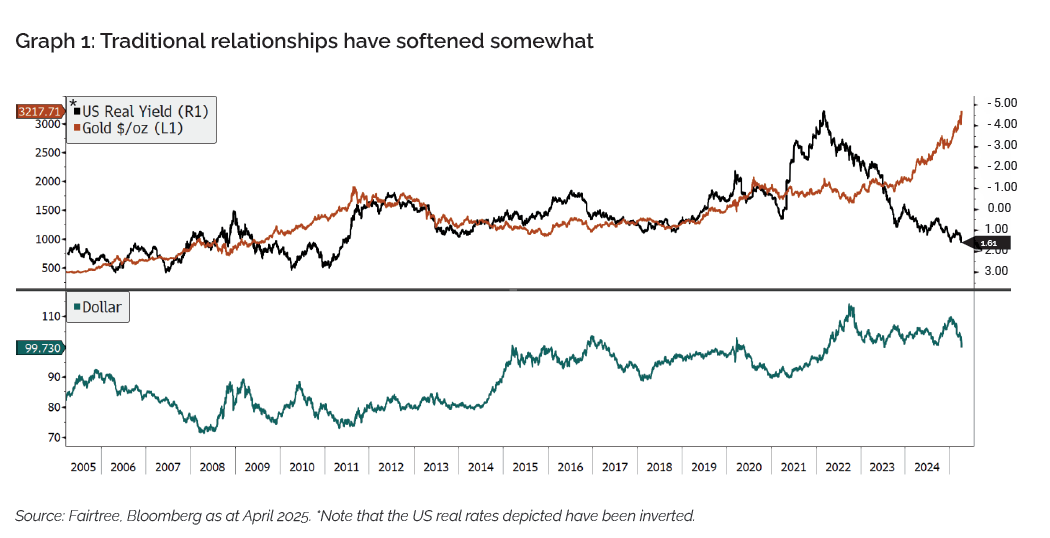
Gold has long been considered a safe haven asset, especially during periods of economic uncertainty. This is because gold is tangible, anticorrosive and a store of value, unlike modern-day fiat currency. As of April 2025, gold prices have surged, approaching record highs. Traditional correlations such as US real rates and the dollar have somewhat broken down, so what is currently supporting the yellow metal?

Factors supporting gold prices – Geopolitical tensions and
economic policy uncertainty.

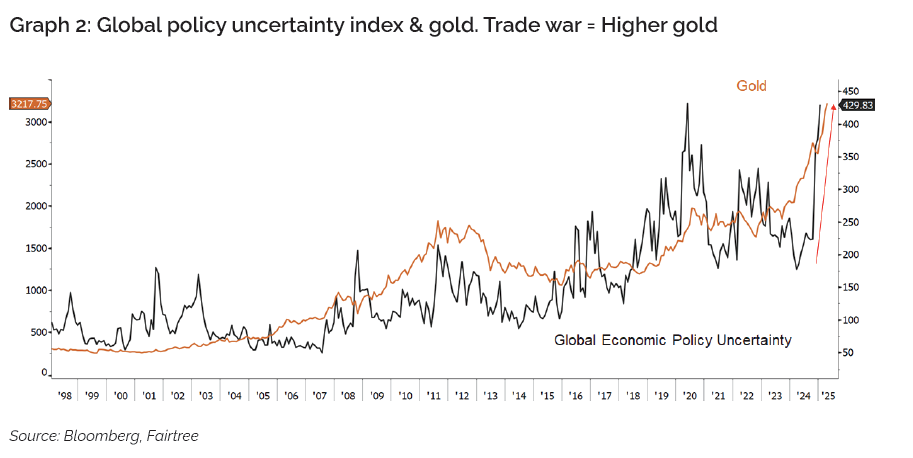
Recent geopolitical developments have significantly influenced gold prices. In April 2025, trade tensions between the US and China escalated and remain fluid. This move intensified market volatility and led investors to seek refuge in safe-haven assets, including gold.

Economic challenges, including concerns over inflation and slow global growth, have bolstered gold’s appeal. In April 2025, gold surged toward record highs amid fears of economic instability following US tariff hikes and geopolitical tensions. Gold’s status as a hedge against inflation and economic uncertainty continues to support its demand.

Central bank purchases

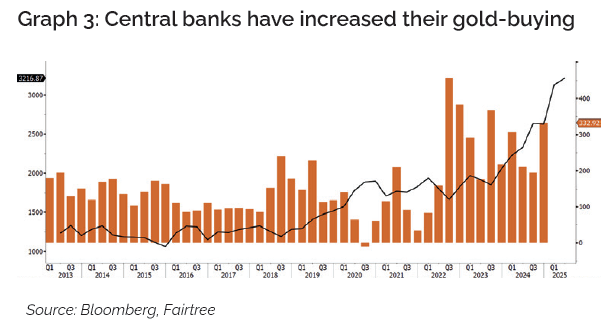
After Russia invaded Ukraine and Russia was cut off from the global monetary system, other central banks, most pronounced across emerging markets,
have been significant buyers of gold, contributing to its price appreciation. In 2024, China’s central bank resumed purchases, adding five tonnes to its
reserves, bringing total holdings to 2,264 tonnes. Such purchases by emerging market central banks have been a fundamental driver of the gold rally since 2022.

Monetary policy and interest rate cuts

Monetary policies, particularly interest rate decisions, play a crucial role in gold’s performance. In September 2024, the US Federal Reserve initiated a rate-cut cycle with a 50-basis-point reduction. Lower interest rates make traditional fixed-income investments less attractive, leading investors to gold, which does not yield interest but offers potential for price appreciation. A key investment debate when considering exposure to gold is whether to hold the gold metal through an ETF or rather buy the gold equities; both have merits and drawbacks.

Merits owning gold equity shares

Leverage to gold prices

Gold equity shares, representing ownership in gold mining companies, often provide leveraged exposure to gold prices. When gold prices rise, the revenues and profits of mining companies typically increase, potentially leading to higher stock prices. For instance, in early 2025, gold stocks like Newmont and Barrick Gold saw share price increases of 29% and 21%, respectively, as gold prices surged.

Dividend income

Many gold mining companies offer dividends to shareholders, providing a source of income. The dividend yields can be attractive, especially when gold prices are high, enhancing the overall return on investment.


Risks of owning gold equity shares

Operational and management risks

Gold mining companies face operational challenges, including mining accidents, labour disputes, and poor management decisions. Operational inefficiencies or poor capital allocation decisions can adversely affect a company’s profitability and, consequently, its stock price. The profitability of gold mining companies is influenced by their cost structures. Rising operational costs, such as energy and labour, can squeeze margins, especially if gold prices do not increase correspondingly. This margin squeeze usually results when inflation is high and increases the per-ounce cost structure of a gold company. Capex is also a key consideration as mining operations are very capital-intensive and strategic decisions to invest or buy an operation can often be done at the top of the commodity cycle.

Regulatory and environmental risks

Mining operations are subject to stringent regulations and environmental considerations. Changes in regulations, environmental policies, or failure to comply with legal standards can result in fines, operational delays, or increased costs, impacting shareholder value. 

Geopolitical and country risks

Mining companies operating in politically unstable or high-risk regions face additional challenges. Expropriation risks, political unrest, and adverse changes in local laws, including royalties and corporate tax, can disrupt operations and negatively affect stock performance.

Conclusion Closing Thoughts

Gold prices are currently supported by a combination of geopolitical tensions, robust central bank purchases, accommodative monetary
policies, and prevailing economic uncertainties. Investing in gold equity shares offers potential benefits, including leveraged exposure to gold prices, dividend income, and participation in company growth. However, investors must also be mindful of the inherent risks associated with mining operations, cost fluctuations, regulatory changes, and geopolitical factors. A thorough assessment of these factors is essential for making informed investment decisions in the gold equity sector.


Should an SA investor still consider emergingmarkets?

Should an SA investor still consider emergingmarkets?

Diversification benefit

South African investors often ask whether it makes sense to have exposure to global emerging markets in their portfolios. One reason is that the South African market is highly correlated with emerging markets, given that South Africa itself is an emerging market. The data shows that the South African market has an average correlation of 80% to the MSCI Emerging Markets Index over various periods from one year to 10 years. Surprisingly, this is only marginally higher than the 70% correlation of the South African market to the MSCI World Index. 

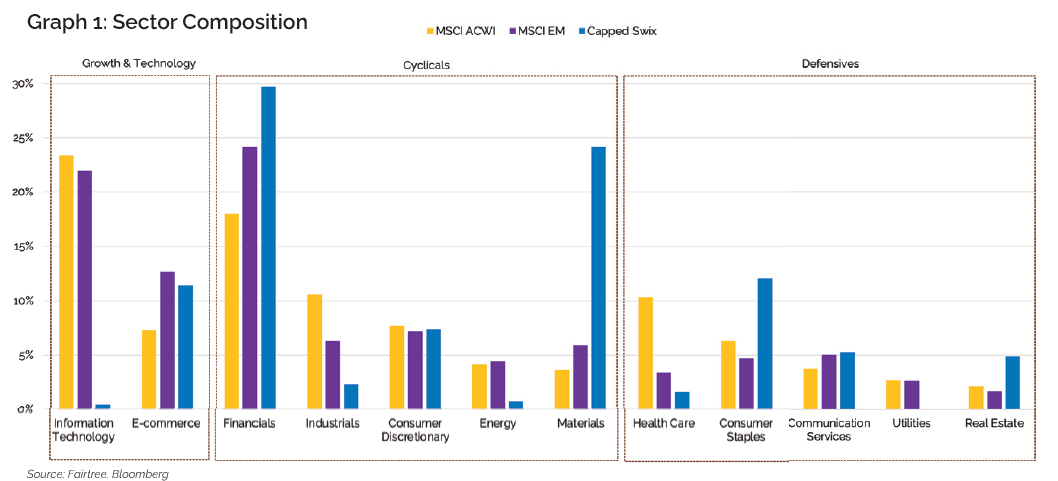
Chart 1 below compares the sector exposure of the MSCI Emerging Markets Index with the FTSE/JSE Capped SWIX Index, highlighting key differences. Investors in South Africa have limited opportunity to buy growth and technology-focused sectors, while being more exposed to cyclical and capital intensive industries like financials and materials. The MSCI Emerging Markets Index composition, on both country and sector basis, has changed significantly over the last fifteen years. It is noteworthy that the MSCI Emerging Markets Index now offers more growth and technology exposure than MSCI World Index. In terms of cyclical exposure, it is similar to having more Financials but fewer Industrials.

Diversification benefit

The opportunity set and diversification benefit provided by emerging markets should thus not be underestimated. Even though South African investors have similar exposure to the ecommerce sector at an index level, this hides the diversification benefit that emerging markets could provide. Using the e-commerce sector as an example, South African investors only have Prosus and its holding company, Naspers, as investable opportunities in the theme. In contrast, investors in emerging markets can diversify the stock-specific risk and keep a similar exposure to the theme through businesses like Pinduoduo, Alibaba and
JD.com.

Emerging markets further give investors access to their own fast-growing, quality businesses within the information technology sector, with Taiwan Semiconductors being a prime example, whereas there are no such options available in the South African market. The significantly broader opportunity set in emerging markets allows investors to find and own businesses still in the early stages of development—many of which have drawn inspiration from global peers like Amazon and other fintech companies and replicated their business models in local markets.


Volatility brings opportunity 

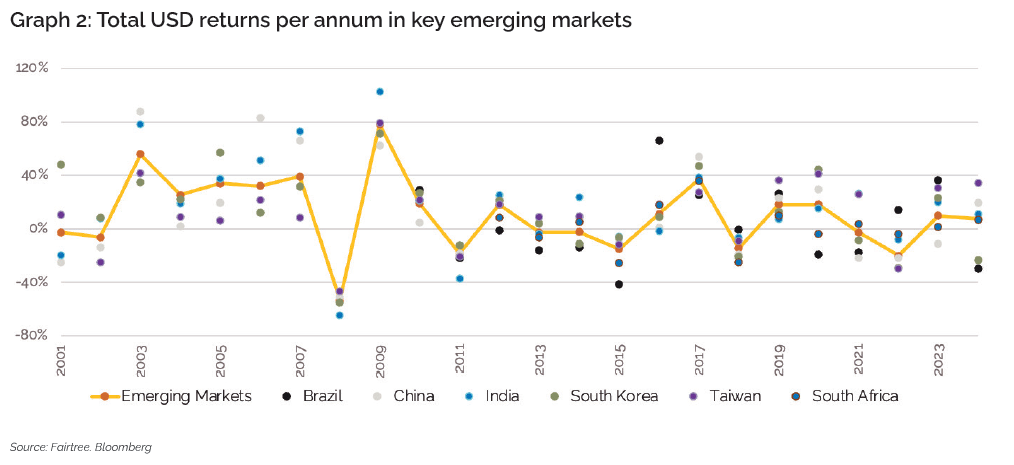
On a country level, emerging markets are very attractive to active fund managers and are a fertile ground for alpha generation. This is due to the significant divergence in performance of the different countries within the Index in any given year.

It is common for countries to have more than 40% differences in dollar returns in any given year. Using 2024 as an example, we can see that China increased by around 20%, while Brazil and South Korea decreased by more than 20%. This creates attractive opportunities for active managers to recycle capital from countries and sectors that have done well into countries that have underperformed.

Graph 2 below illustrates this point by plotting the US dollar returns of a few selected countries as individual dots per year and the return of the Emerging Markets Index as a line over the periods.

Higher economic growth exposure

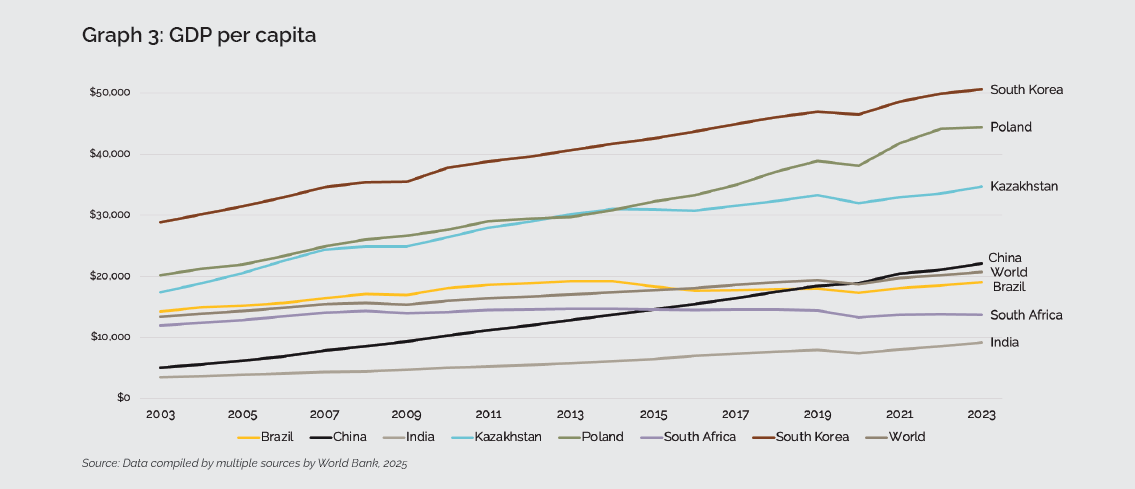
Furthermore, the exposure that emerging markets provide to high-growth countries like China, India and Kazakhstan is very attractive. Chart 3 below shows South Africa has only been able to grow its GDP per capita by 0.7% per annum over the 20-year period, whereas a country like China has been able to grow GDP per capita by 7.6% per annum and India by 5% per annum. The runway for continued growth also remains attractive, with China’s GDP per capita currently only 29%, while that of the United States and India is around 12%.

We know that over time, the value of an investment is driven by the earnings power and free cash flow generation of the business. It is easier for companies to grow in a healthy economy. Moreover, corporate governance continues to improve in emerging markets, and management teams are increasingly focused on driving shareholder returns, with Korea’s value-up programme and China’s 9-plan rule being two recent examples.

Conclusion Closing Thoughts

In conclusion, emerging markets are an attractive building block in a portfolio for South African investors given the much wider opportunity set of quality, fast-growing businesses and diversification benefits on a stock, sector and country basis. The scatter plot highlights that active managers have ample opportunities to rotate between regions, given the divergence in performance, thereby adding additional alpha to the portfolio.

Is the USA stock market too expensive

Is the USA stock market too expensive

Outperformance of the USA

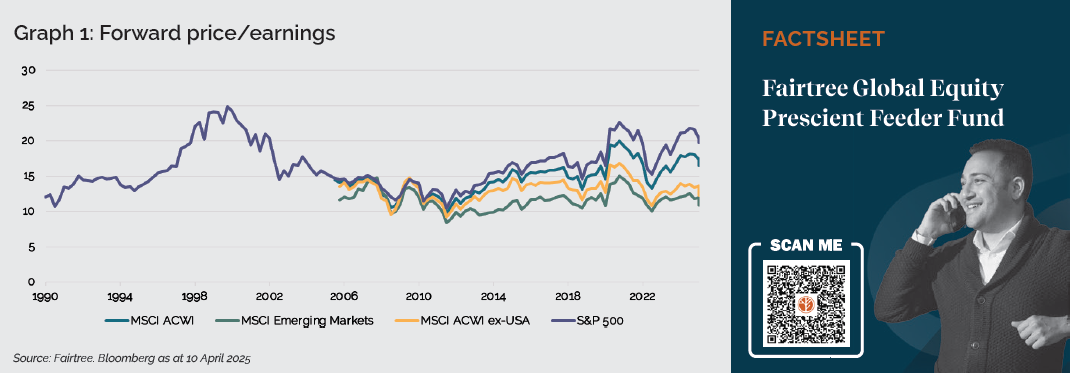
The S&P 500 has enjoyed a stellar decade of growth, compounding at 12% in US dollars. In comparison, the MSCI ACWI (All Country World Index), excluding the USA, has compounded at only 5% over the same period. The dominance of the US market is evident in the top 10 constituents in MSCI ACWI, all of which are American companies, and they now make up 65% of the MSCI ACWI. Given this, it is crucial for investors to assess whether US stocks are justifiably expensive or if valuation concerns are overstated.

For years, the consensus has been that the US market is expensive, consistently trading at a premium on various valuation metrics such as price/earnings, price/sales, dividend yield, and price/book. However, such a conclusion may be overly simplistic.

The USA’s growth and return advantage

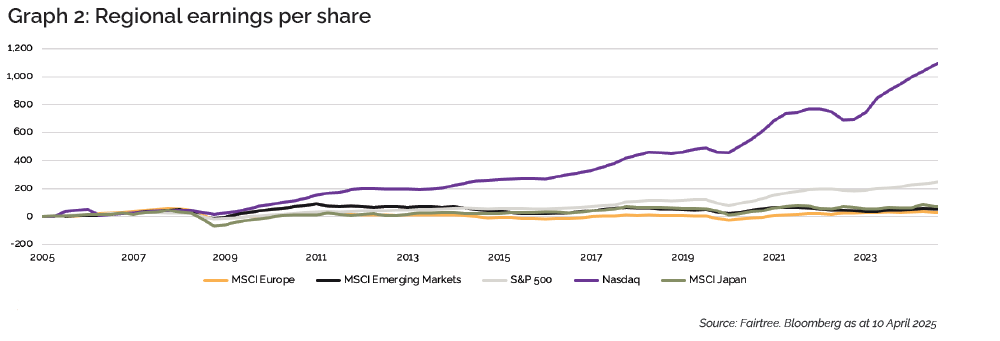
US companies have delivered stronger earnings growth than other geographies. This has been driven by a combination of easy monetary and fiscal conditions, healthy demographics, a venture capital industry, and a regulatory environment that fosters entrepreneurial innovation.


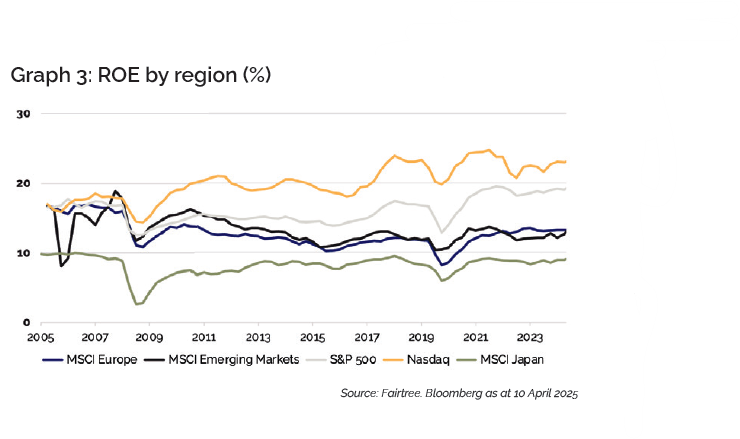
US companies have consistently delivered superior returns compared to their developed market peers, benefiting from higher profitability and better capital efficiency. While European and Japanese firms often struggle with sluggish economic growth and structural inefficiencies, US corporations have leveraged technology, innovation and flexible labour markets to sustain higher margins and shareholder returns.

The cost of capital has changed

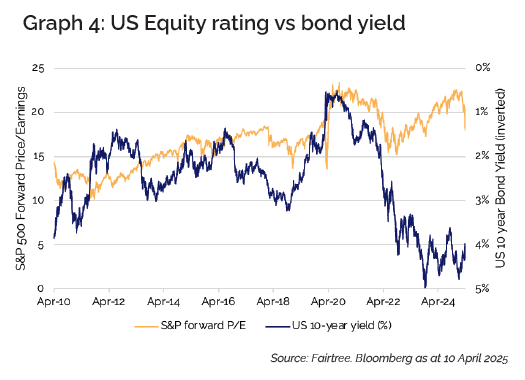
When the cost of capital was cheap during the early 2010s, it allowed companies such as Meta to purchase businesses like Instagram and WhatsApp, thereby strengthening their eco-system and deepening their moats and enhancing their advertising monetisation potential. In this low-rate environment, investors could justify paying higher multiples for these high-growth companies. One of the biggest shifts over the last few years has been the increase in US bond yields. With US inflation remaining sticky and bond yields above 4%, the cost of capital has increased, making equities less attractive relative to bonds versus the previous decade.

One of the biggest shifts over the last few years has been the increase in US bond yields

Investors must also weigh valuation multiples against a broader set of fundamental factors, including growth prospects, return profiles, changing capital intensity, and sustainability of competitive advantages in a fast changing environment.

The BATMMAAN effect

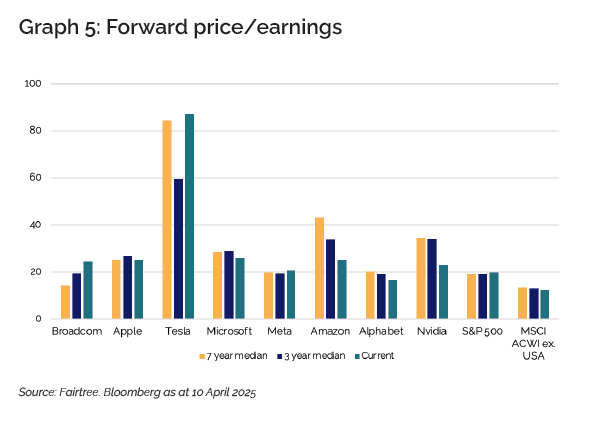
A significant portion of the US market’s strength comes from a handful of dominant technology companies, often referred to as the BATMMAAN stocks Broadcom, Apple, Tesla, Microsoft, Meta, Amazon, Alphabet, and Nvidia. These companies have reshaped industries, with their high-margin, capital-light business models enabling them to generate substantial cash flows and reinvest in growth. Unlike traditional sectors such as Financials, Materials, and Industrials, which require continuous reinvestment, these tech giants enjoy pricing power, network effects, and recurring revenue streams, justifying their premium valuations. Interestingly, history shows that dominant companies tend to remain dominant for longer than many investors expect. Despite their superior business models and growth outlook, most of these companies have derated over the last couple of years and now trade at parity versus the S&P 500.

Conclusion Closing Thoughts

While the US stock market may appear expensive on a headline basis, its premium valuation is backed by structural advantages, superior earnings growth and returns, and sector composition differences. The rise of the BATMMAAN companies has further reinforced this trend. As history has shown, valuation alone is rarely a sufficient reason to avoid an investment— growth, quality and competitive advantages must also be factored into the equation. Investors should, therefore, tread carefully before dismissing the US market as merely “too expensive”. Rising uncertainty from tariffs and broader geopolitical tensions, as well as the fast-changing technological landscape, means that multiples will probably compress and that you must be selective with your exposure.

Should I time the rand when investing offshore?

Should I time the rand when investing offshore?

Counterbalance of exchange rate and equity markets

The South African rand is one of the most volatile currencies globally compared to advanced economies and emerging market peers. Only the Russian rouble and Argentinian peso have been more volatile in the last decade. South Africa’s rand is traded in large volumes globally and is often used as a proxy for emerging market investment. It makes the currency highly exposed to external shocks and, thus, highly volatile.

It is in most people’s best interests to diversify and invest in offshore equities, but trying to time the investment can be very nerve-wracking, especially if you’re advising clients or making investment decisions on their behalf. What if the rand strengthens and the investment loses value in rand terms?

The good news is that if you look at the last 25 years, it is rare for the exchange rate movement to dominate equity returns.

Equities and emerging market currencies, like the rand, are assets that perform well in risk-on environments. It is, therefore, unusual for the rand to strengthen when global equities sell-off.

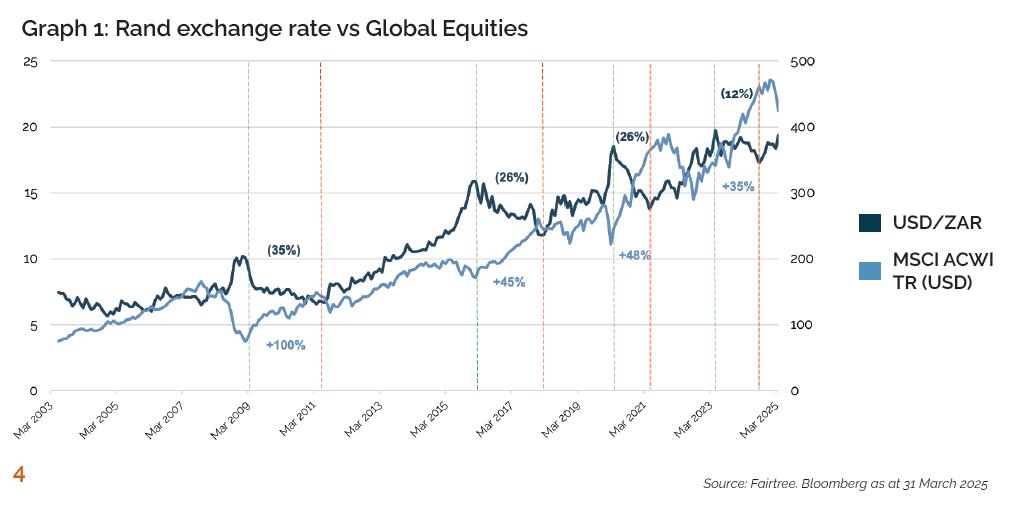
If you were unlucky or panicked at the four points in the last two decades (green dotted lines in Graph 1 below) where the rand was extremely undervalued, you still ended with a positive return in rand terms on all four occasions. The rand strengthened by 12-35% over these four periods, while global equities rallied 35-100%.

The rand strengthened by 12-35% over these four periods, while global equities rallied 35-100%.


Looking at the opportunity cost

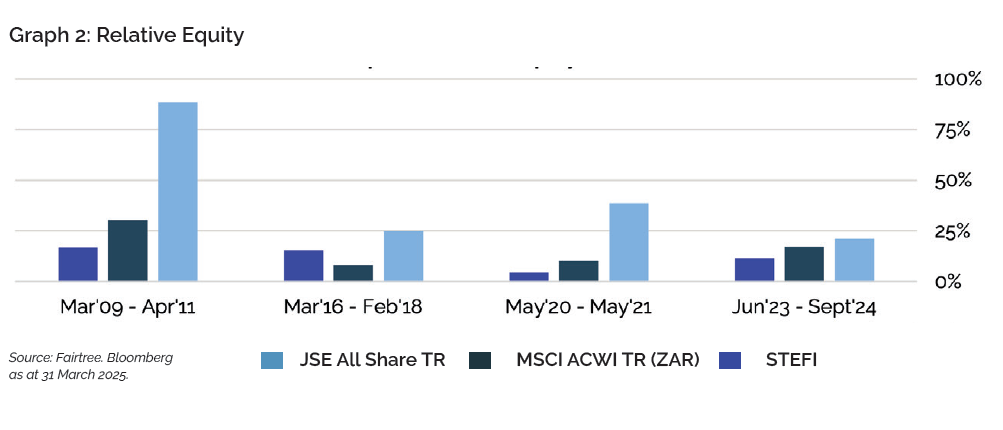
Clearly, investing offshore before the rand strengthens by more than 10% is not optimal, but hardly a disaster. You need to consider the alternative if you are trying to time the exchange rate. Do you wait in a money market account, which generally offers a low real return, or will you deploy the money in local equities? The offshore equity investment outperformed STeFI in three of the four periods despite the rand strengthening significantly. Investing in the local equity market would have been a better decision over all four periods, but investing in equities with such a short time horizon is usually not advisable.


The South African Rand is undervalued

The rand almost always appears undervalued, irrespective of your preferred calculation method. Unfortunately, with the lack of sufficient electricity supply, logistics capacity, and other regulatory constraints, our economy struggles to react to exploit this rand weakness by ramping up production for exports.Looking at South Africa’s rising debt/GDP and debt service costs, our fiscal situation remains precarious and therefore attracts an extra risk premium.


CONCLUSION: Closing thoughts

The rand is undervalued above R18.50, but no clear catalysts are on the horizon for it to strengthen significantly. It is difficult to time equity markets and exchange rates, so it is often best to stick to your strategic asset allocation unless we are at extreme levels. If that requires you to invest in offshore equities, it probably does not help to worry too much about getting the optimal rand exchange exit point because it could mean you are missing out on valuable equity returns.


Website Preloader